Quadcopters
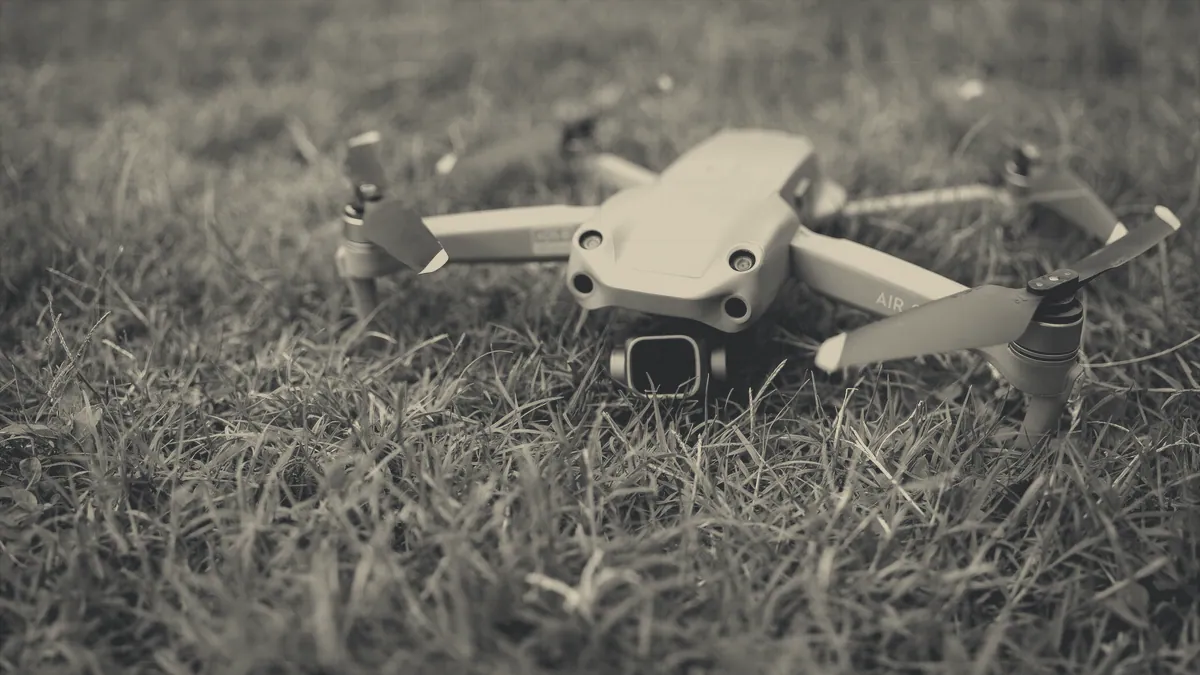
A quadcopter is a rotorcraft lifted by exactly 4 rotors, arranged in 2 diagonally opposite pairs that turn in opposite directions, with the blades fixed at one pitch angle and every control input made by varying the speed of individual motors. The word names a mechanical layout and nothing else. It says how many rotors there are and how the aircraft is balanced, and nothing about who is flying it, whether it carries a camera, or what it is for.
What a quadcopter is, precisely
A quadcopter is precise in a way most words in this subject are not, because it is a count: 4 rotors, fixed pitch, opposed rotation. The 2 rotors on one diagonal turn clockwise and the 2 on the other turn anticlockwise, so their torques cancel and the airframe does not spin under the discs. Add 2 more rotors and the machine is a hexacopter with 6, add 4 more and it is an octocopter with 8, and the family term covering all of them is multirotor.
Everything the aircraft does comes from that arrangement. To climb, all 4 motors speed up together. To roll or pitch, 2 motors on one side speed up and the opposite 2 slow down, tilting the airframe so that part of its thrust points sideways. To yaw, the 2 rotation pairs are deliberately unbalanced and the leftover torque turns the nose. A flight controller carrying gyroscopes and accelerometers does this arithmetic continuously, because a human cannot: a quadcopter with no controller is not a difficult aircraft, it is an impossible one.
Quadcopter or drone: which word is which
Quadcopter describes a mechanism and drone describes a mode of operation, which is why the two words are not interchangeable even though they usually point at the same object. A drone is any aircraft flown with nobody on board, so the term also covers fixed wing unmanned aircraft and single rotor machines, and in loose usage it has spread to uncrewed boats and vehicles. Every hobby quadcopter is a drone. Most drones sold to the public happen to be quadcopters. Neither statement makes the words synonyms, and a specification that says quadcopter tells a buyer something that one saying drone does not.
What flying a quadcopter is actually like
Flying a quadcopter is easy for the first ten minutes and misleading thereafter, which is the most useful thing to know before buying one. A machine with satellite positioning and a barometer will take off, climb to a set height and hold it in a breeze while the pilot lets go of both sticks. Nothing else in the hobby is that forgiving, and beginners conclude from the first flight that they can fly.
The difficulty arrives when the aids stop. Indoors, under trees or beside a building the satellite fix degrades, the aircraft reverts to holding attitude rather than position, and it drifts with the wind until the pilot flies it properly. Orientation is the other trap: a quadcopter looks nearly identical from every angle, so once it is far off or has turned around, many pilots genuinely cannot tell which way the nose points. Learn to fly it nose in and close before flying it far.
Caution
A quadcopter arms its motors before it takes off, and armed props can spin to full speed if a stick is knocked. Hard plastic and carbon propellers cut deeply at flying speed. Arm the aircraft only on the ground and clear of everybody, and disarm before picking it up.
What it costs to get into quadcopters
The cost of getting into quadcopters spreads across three bands, and the machine itself is only the first. Toy grade quadcopters with a simple camera sit under fifty pounds and are useful only for learning orientation. A racing or freestyle machine built from parts sits above that. A camera machine with a stabilised gimbal and satellite positioning sits in the two hundred to five hundred pound band and beyond.
- Buy two or three spare flight packs, since flight times are short and packs are proprietary.
- Buy propeller sets in quantity, because propellers are consumable.
- Buy a case, since a bent arm or a scratched gimbal usually happens in transit.
- Register the aircraft where the Civil Aviation Authority scheme requires it, and pay the fee.
The recurring cost that surprises people is the battery. Flight packs age whether or not they are flown, are frequently model specific, and replacing a set two years on costs a noticeable fraction of the original price.
Quadcopters against the rest of the multirotor family
Against 6 and 8 rotor machines a quadcopter is lighter, cheaper, simpler and more efficient, which is why almost every consumer aircraft uses the layout. A set of 4 motors, 4 speed controllers and 4 propellers is the smallest that controls all 3 axes and still holds itself up.
What it gives up is redundancy, and this is where the other layout genuinely wins. Lose 1 motor of the 4 and the aircraft cannot balance the remaining 3, so it comes down. A hexacopter that loses 1 of its 6 still has 5 turning and lands under control, which is why heavier airframes carry 6 or 8 rotors despite the loss in efficiency. Radio controlled aircraft with fixed wings beat it on endurance and range by a wide margin, since a wing is carried by the air while a rotor holds itself up continuously. RC helicopters beat it on flight envelope, because they change blade pitch and a quadcopter cannot. Camera drones are what most readers are shopping for, and nearly all of them are quadcopters underneath.
Instructions, reviews and the customs code
The instructions supplied with a quadcopter cover four things and skip the fifth. They cover binding the controller to the aircraft on the 2.4 GHz band, charging the pack, fitting the propellers in the correct rotation, and calibrating the compass and inertial sensors on level ground away from metal. What they rarely explain is the failsafe: what the aircraft does when the signal is lost or the battery reaches its reserve, whether it climbs first, and to which point it returns. That setting decides where the machine ends up on a bad day.
Reviews are worth reading for three things: flight time measured rather than quoted, behaviour in wind, and whether spares are still sold a year after release. Ignore the sample footage, which is graded, and ignore any review that reads as a retyped specification list.
The customs code question arises because a quadcopter ordered from outside the United Kingdom needs a commodity code for import, and the classification of unmanned aircraft is not obvious. Codes are set by the tariff rather than the seller, depend on weight and on whether a camera is integral, and change. Check the UK Trade Tariff published by HM Revenue and Customs, not a code copied from a forum.
Should you start with a quadcopter?
Yes, for most people, because the flight controller does the hard part. A quadcopter is the only class here that a complete beginner can fly successfully on the first attempt, the only one that holds still while the pilot thinks, and the only one that produces a usable photograph. Start here if the aim is a picture, or a machine flown on ordinary afternoons rather than at a club.
No, if the aim is to learn to fly. A quadcopter that stabilises itself teaches airmanship slowly, because the pilot never has to acquire the reflexes the aircraft is supplying. A first RC plane is the better starting point, and rotors can come afterwards. Anybody who assumes a stabilised machine removes their obligations should note that aircraft over 250 grams bring registration and competency requirements under the Civil Aviation Authority scheme. Those requirements change, and the Civil Aviation Authority is where the current position is published.