How to choose a drone
Choosing a drone in the United Kingdom comes down to five decisions taken in order: which class of aircraft you want, which side of the 250 gram line it sits on, how much camera you actually need, how long it stays up, and whether you are prepared to build it. Get the class right and every other specification follows from it. Get the class wrong and no amount of sensor size or flight time rescues the purchase. This page is a guide to that decision. Nothing is sold here, no model is recommended, and no price is quoted for a named machine.
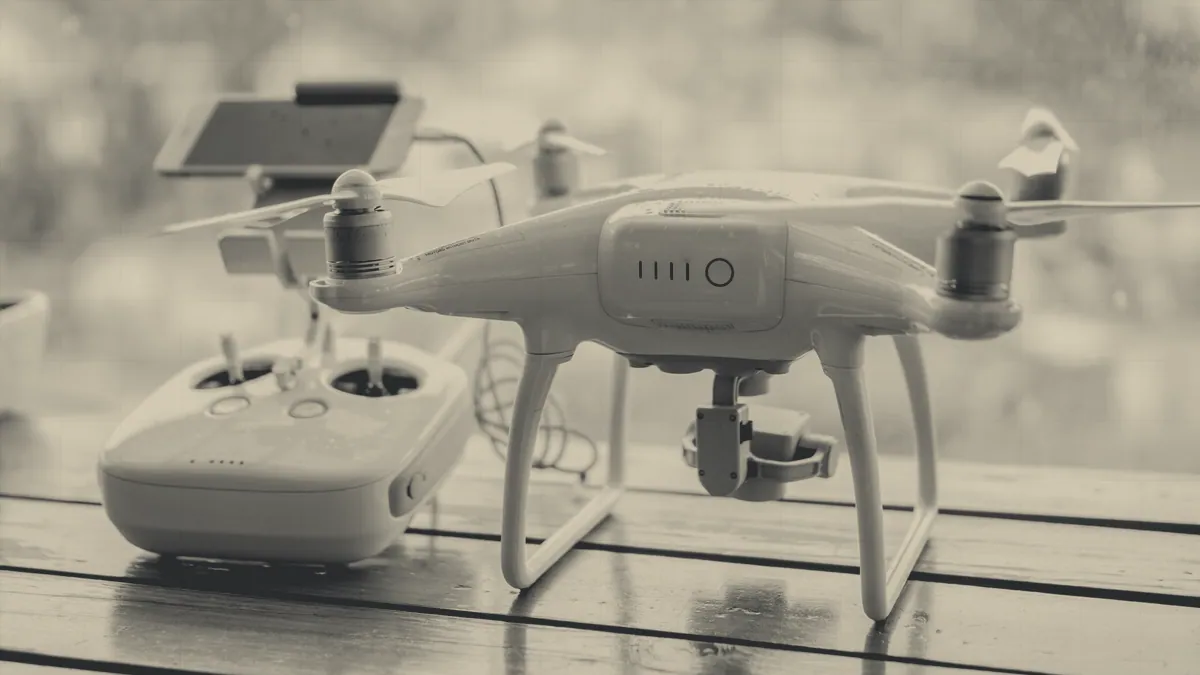
The reason for a guide rather than a list is that a list goes stale. A model that leads its class is replaced within about eighteen months, so a page naming the best one is an advertisement that is wrong within the year. Classes and specifications last.
The five classes, and who each one is for
The five classes below cover essentially the whole hobby market. Read the right hand column first, because the honest way to choose a drone is to recognise your own description and then read across.
| Class | What it does well | Where it is the wrong answer | Who it suits |
|---|---|---|---|
| Toy and indoor trainers | Teaches the sticks cheaply, indoors, in any weather | Outdoors in any real wind, and for any usable footage | Somebody who has never flown anything and wants to find out whether they enjoy it |
| Sub 250 gram folding models | Travels in a coat pocket and stays under the class boundary | In strong wind, and where a large sensor is the point | Somebody who wants pictures on trips and does not want a hobby |
| Larger camera aircraft | Holds position in wind, carries a bigger sensor, flies further | Anywhere you have to carry it far, or fly on impulse | Somebody whose photographs are the reason for the purchase |
| First person view and racing | Flies through gaps and does what no camera drone can | As a first aircraft, and for anything resembling a family holiday video | Somebody who wants flying itself to be the hobby |
| Fixed wing models | Covers distance and stays airborne far longer per pack | Anywhere without open ground, and whenever you need to hover | Somebody with a field, and patience for launches and landings |
Two of the five have their own reference pages on this site. Camera drones goes through the class most first purchases land in, including what a gimbal buys and where sensor size stops mattering. FPV and racing drones goes through the class flown through goggles, where most machines are assembled rather than unboxed. If the word drone itself is still doing too much work, What a drone actually is separates the hobby aircraft from the other three senses and lists the parts.
The 250 gram line, and why it is the first specification to check
The 250 gram line is the first specification to check because it is the only one that changes which requirements apply. The Civil Aviation Authority sets the boundary at 250 grams, and an aircraft below it is treated differently from one above it. This is why a whole generation of folding camera machines is engineered to come in just under the figure, battery included, and why manufacturers publish take off weight so prominently. Adding a propeller guard or a heavier pack can push an aircraft over the line, and the line does not care that it was under it in the shop.
What sits either side of the boundary is a matter for the rules pages rather than for a buying guide. The requirements change, they are published by the CAA, and the CAA is the only place to confirm them. What belongs here is the buying consequence: decide which side of the line you want to be on before you compare anything else, because it silently rules out most of the shortlist either way.
The specifications that decide it, and the ones that do not
The specifications that decide a purchase are fewer than a product page suggests. Six of them genuinely change how the aircraft behaves in your hands. Most of the rest are numbers printed to fill a table.
- Take off weight. Decides the class, and therefore the requirements. Check it with the battery fitted, not the airframe weight.
- Sensor size and gimbal type. Decides whether the footage is usable. A mechanically stabilised gimbal on three axes is a different thing from software stabilisation, and the difference shows in wind.
- Wind resistance. Decides how many days of the British year the aircraft is flyable at all. It is quoted as a wind speed the machine can hold position in.
- Flight time. Decides how much you get done per outing. The advertised figure is measured in ideal conditions and the real figure is shorter.
- Transmission system. Decides whether the live picture holds together at distance and behind obstacles. It is the specification people notice last and complain about first.
- Spare parts availability. Decides whether a broken arm is a repair or a write off. Propellers and arms are the parts that break.
Specifications that matter less than their prominence suggests include maximum transmission range, a laboratory figure bounded in practice by the requirement to keep the aircraft in sight; maximum speed, which nobody flying for pictures ever uses; and megapixel count alone, which tells you nothing without the sensor size behind it. Thermal imaging appears on consumer sheets occasionally, and it is a genuine capability with almost no hobby use.
What a drone costs, in bands
Drones cost anything from the price of a takeaway to the price of a used car, and the ladder has four rungs that behave quite differently. Prices are given here as bands rather than as figures against models, because a figure attached to a named machine is out of date almost immediately.
- Under fifty pounds. Indoor trainers and toys. No usable camera, minutes of flight, and worth it purely to find out whether you like flying.
- Fifty to two hundred pounds. Outdoor beginner machines and simple camera models. Position holding is basic and wind is the enemy.
- Two hundred to five hundred pounds. Where the sub 250 gram folding class largely lives. This is the band that produces footage most people are happy with.
- Above five hundred pounds. Larger sensors, better transmission, real wind tolerance, and weight that puts the aircraft firmly above the class boundary.
Two costs sit outside the aircraft and are routinely forgotten. Insurance is never included in the price of the machine and is usually arranged through membership of a model flying association. Spare batteries are effectively part of the purchase, since one pack means one short flight, and they are priced as accessories rather than as the necessity they are.
Where the law sits in the buying decision
UK drone law affects the buying decision at exactly two points, and it is worth knowing which two before comparing machines. The first is weight, through the 250 gram boundary described above. The second is whether the aircraft carries a camera, which the Civil Aviation Authority scheme treats as a distinct question from weight. Beyond those two, the law governs how and where you fly rather than what you may own, including the 400 foot height ceiling, which is about 120 metres, and the requirement to keep the aircraft in sight.
No page on this site tells a reader what they personally may or may not do. The requirements are published by the CAA, they are revised from time to time, and they must be checked there before a flight. What this page will say is that a licence, in the sense people mean when they search for one, is not something you buy with the aircraft, and that registration and flyer competence are handled by the CAA scheme rather than by the retailer.
Buying new, buying used, and buying the parts
Buying used is the sensible route into the more expensive classes and the risky route into every other one. A used camera aircraft is worth considering if the battery health is visible in the flight logs and the gimbal has never been dropped, since those two components are the expensive failures. A used racing machine is a different proposition entirely, because it has almost certainly been crashed, which is what racing machines are for.
Buying the parts and assembling the aircraft yourself is the third route, and it is the normal route in the racing class rather than an eccentric one. It costs time rather than money, it produces a machine you can actually repair, and it is a poor first purchase for somebody who wants to be flying this weekend. Line of Sight covers that path, the classes above, and the rules that attach to each of them, and it sells none of them.