Propellers
Drone propellers are the moulded blades that convert motor rotation into thrust, and on a quadcopter there are four of them, two turning clockwise and two turning anticlockwise. They are the only part of the aircraft that touches the air, the only part that regularly touches the ground, and the cheapest thing on the machine. They are also the part most likely to be damaged in a way you cannot see, which is why a flyer who inspects nothing else should still inspect these.
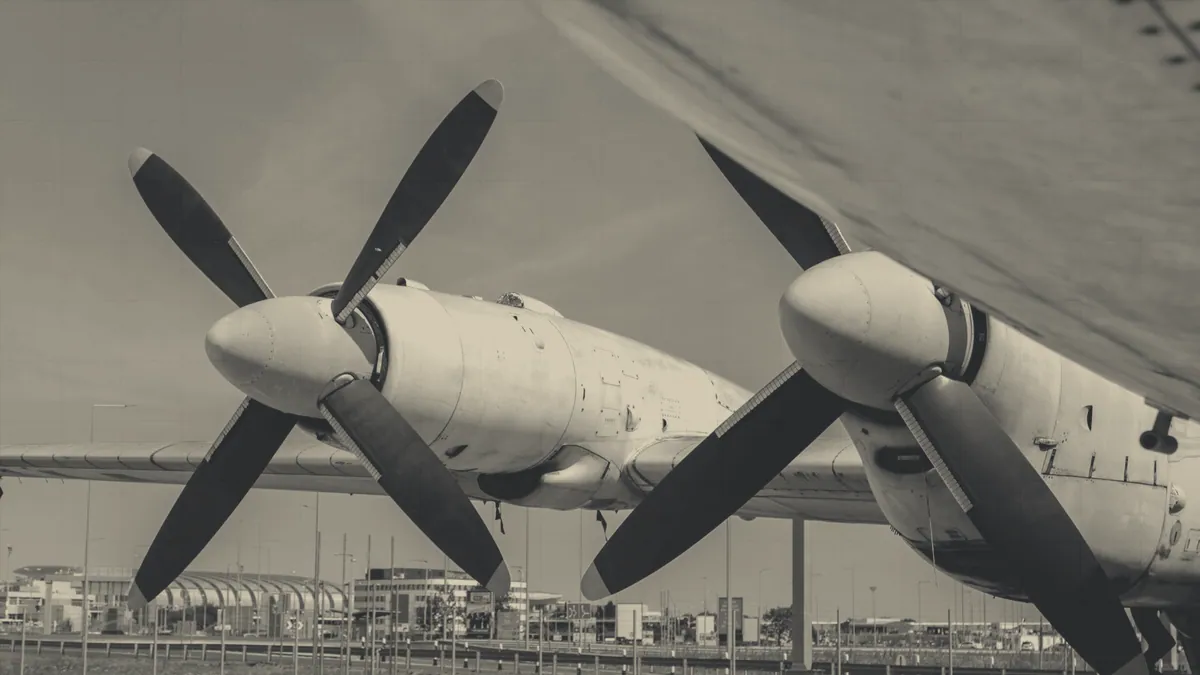
What a drone propeller is
A drone propeller is a fixed pitch aerofoil, moulded in one piece, that produces lift by driving air downwards as it turns. It is fixed pitch in the sense that the blade angle is cast into the plastic and cannot be altered in flight, which is the fundamental difference between a multirotor and a helicopter: a helicopter changes the pitch of its blades to change lift, and a quadcopter changes the speed of its motors instead.
What distinguishes a propeller from the other parts of a drone is that it is a consumable with no service interval and no warning light. A motor gives you months of notice. A propeller can be sound on one flight and cracked on the next, after a single contact with a fence post that you barely noticed. A set of four costs less than a tank of petrol and lasts as long as your flying is tidy.
The numbers on a propeller and what they mean
Propellers are sold under a code of four or five digits, and the code is two measurements in inches with the decimal point removed. On a 5045 propeller, the first two digits are the diameter, 5.0 inches, and the last two are the pitch, 4.5 inches. Pitch is the distance the propeller would advance in one full turn if the air were solid, so it is a measure of blade angle expressed as a length. Some manufacturers write the same thing longhand as 5 x 4.5 x 3, where the third figure is the number of blades.
| Figure | What it measures | What happens when it goes up |
|---|---|---|
| Diameter | Tip to tip, in inches | More thrust and better efficiency at low speed, more inertia, slower to change speed |
| Pitch | Blade angle, expressed as inches of advance per turn | Higher top speed, more current drawn, more heat in the motor |
| Blade count | Two, three, four or more | More grip in the air and smoother thrust, more drag and less efficiency |
| Bore or hub | The fitting that meets the motor | Nothing, but it must match the shaft exactly |
The bore is the figure beginners miss, because it is not in the four digit code. A propeller either has a plain hole sized for the motor shaft, typically 5 mm on a 5 inch build, or it has a T mount with two screws, or on very small machines it presses onto a shaft with an interference fit. A propeller with the right diameter and the wrong bore is the wrong propeller.
How a propeller fails, including the failure you cannot see
Propellers fail in five ways, and only two of them are visible from a standing position. A chipped tip and a cracked hub you will spot. A warped blade, a fatigued blade that no longer matches its partner, and a delamination under the surface you will not, and those are the three that matter most.
- Chipping at the tip, from contact with grass, gravel or a wall, which unbalances the blade and costs thrust.
- Cracking at the hub, radiating out from the bore, which is where the whole load is carried and where a blade lets go.
- Bending or warping, most often from heat or from being stored under something in a bag.
- Fatigue, where a blade that has taken several knocks flexes more than its partner and no longer matches it.
- Delamination, on carbon or glass filled blades, showing as a pale line under the surface.
In the air, propeller damage announces itself before it fails. The aircraft develops a buzz you can hear from the ground and feel in the handset. Video acquires the fine vertical wobble that flyers call jello. Hovering costs more current than it used to, so the flight time falls. One motor runs noticeably hotter than the other three, because the flight controller is working that corner harder to compensate. Any one of those four is a reason to land and look.
Caution
A propeller that sheds a blade at full throttle throws it several metres, and the aircraft goes over on its back and comes down. Replace any propeller with a crack near the hub rather than flying it out. Never spin up a motor on the bench with a propeller fitted, and never test one indoors.
Choosing and replacing propellers
To choose a propeller, start from the aircraft rather than from the propeller. Three things must match: the diameter the frame is cut for, the bore or mount the motor uses, and the direction, because two of the four turn each way and a propeller fitted the wrong way round makes that corner push down instead of up, so the aircraft flips as it leaves the ground. The direction is marked on the hub as CW or CCW, or by the letter R for reverse, and on many sets the two directions are moulded in different colours so you cannot mix them up in a field.
- Disconnect the battery, and check that it is disconnected a second time.
- Note the direction marking on the propeller you are removing, and which arm it came from.
- Unscrew the retaining nut, remembering that on many motors two of the four nuts have a left hand thread so they self tighten in flight.
- Lift the old propeller off, and inspect the motor shaft and the top bearing for grit while it is exposed.
- Fit the new propeller with the leading edge facing the direction of travel and the markings matching what came off.
- Tighten the nut firmly by hand, not with pliers, because over tightening cracks the hub.
- Turn each propeller by hand through a full revolution and check nothing fouls.
Replace them as a set of four, not one at a time. Four propellers from the same batch are matched to each other, and a single new blade on an aircraft with three worn ones reintroduces exactly the imbalance you were trying to remove. Keep a spare set in the bag: a propeller is the one failure that ends a flying session and the one spare that fits in a pocket. The parts of a drone sets out where propellers sit in the wider anatomy, and Motors and speed controllers explains the shaft and mounting that the propeller has to fit.
The alternatives
The choice is between three materials and between two, three and four blades, and each combination is better at a different kind of flying. Polycarbonate and nylon blades flex, absorb a strike and often survive it. Glass filled nylon is stiffer, holds its shape under load and gives crisper handling at the cost of shattering instead of bending. Carbon composite is stiffer still, is used almost exclusively on larger heavy lift machines, and is genuinely dangerous to handle because a carbon blade does not forgive a hand.
Blade count follows the same logic. Two blades are the most efficient and give the longest flight time, which is why camera drones and long range machines use them and why folding two blade propellers are standard on travel aircraft. Three blades give more grip in the air and hold a line better through a fast turn, at a cost in flight time, which is why racing and freestyle builds use them. Four and five blade propellers exist for very small ducted machines where the duct limits diameter and blades are the only way left to add thrust.
The case where the other option wins is worth stating plainly, because the racing convention has spread to machines it does not suit. If your flying is photography, a three blade propeller will cost you minutes of flight time and give you nothing back, and the manufacturer's own two blade folding propeller is the better part. How to choose a drone sets out which class of machine you are in before you start picking blades.
Why two of the four turn the other way
Two of the four propellers turn the other way because a spinning propeller pushes back against the aircraft with an equal and opposite twist, and four propellers all turning the same way would spin the airframe continuously in the opposite direction. Running two clockwise and two anticlockwise cancels those four reaction torques against each other, and the aircraft holds a heading with no tail rotor and no moving control surfaces of any kind.
The two directions are placed diagonally, not side by side. On a standard quadcopter the front left and rear right motors turn one way and the front right and rear left turn the other, so each opposing pair is balanced across the centre of the aircraft. Two conventions exist for which diagonal gets which direction, described as props in and props out according to whether the blades at the front sweep towards the centreline or away from it. Props out is the common setup on freestyle machines because it throws debris away from the camera; the flight controller is told which convention is in use and reverses the motors in software to suit.
Yaw comes out of the same arrangement for free. To turn the aircraft on the spot, the flight controller speeds up one diagonal pair and slows the other. Total thrust is unchanged, so the aircraft neither climbs nor descends, but the torques no longer cancel and the airframe rotates towards the slower pair. That is the whole mechanism, and it is why drone motors spin in opposite directions on every quadcopter.
How fast they turn follows from the motor and the battery rather than from the propeller. A brushless motor's KV figure is its unloaded revolutions per minute for each volt supplied, so the arithmetic is simple: a 2400KV motor on a four cell lithium polymer pack, which has a nominal 14.8 V, works out at roughly 35,000 rpm with nothing on the shaft. Fit a propeller and the real figure drops well below that, because the blades are now doing work, and it drops further as the pack empties and the voltage sags. Small propellers turn fastest; a large camera drone propeller turns at a small fraction of those figures and is much quieter for it.
Are upgraded propellers worth buying?
Yes on a build you assembled yourself, and generally no on a camera drone you bought complete. On a self built quadcopter the propeller is the cheapest component with the largest effect on how the aircraft flies, and swapping a set of blades changes the handling more than any other purchase at the same money: a lower pitch set for smoother cinematic movement, a higher pitch set for speed, a two blade set to add flight time for a long range flight. Buying three sets and flying them back to back on the same day teaches more about the aircraft than reading about it.
On a factory camera drone the calculation reverses. The manufacturer matched the propeller to the motor, the battery and the flight controller's tuning, and the aftermarket blades sold as quieter or more efficient are changing one variable in a system tuned around the original. Buy genuine replacements, buy them before you need them, and spend the difference on a second battery, which will change your flying far more than a propeller will. FPV goggles are a better upgrade again if what you actually want is a different experience rather than a different set of numbers.