Drone batteries
A LiPo battery is a rechargeable lithium polymer pack, built from one or more soft foil pouch cells, and it holds every joule of energy a hobby drone turns into lift. One lithium polymer cell sits at 3.7 volts nominal and 4.2 volts when it is full, so a pack is named for how many of those cells are wired in series: a 3S pack is three cells, 11.1 volts nominal and 12.6 volts fully charged. Nearly every consumer multirotor sold in the United Kingdom flies on one of these packs.
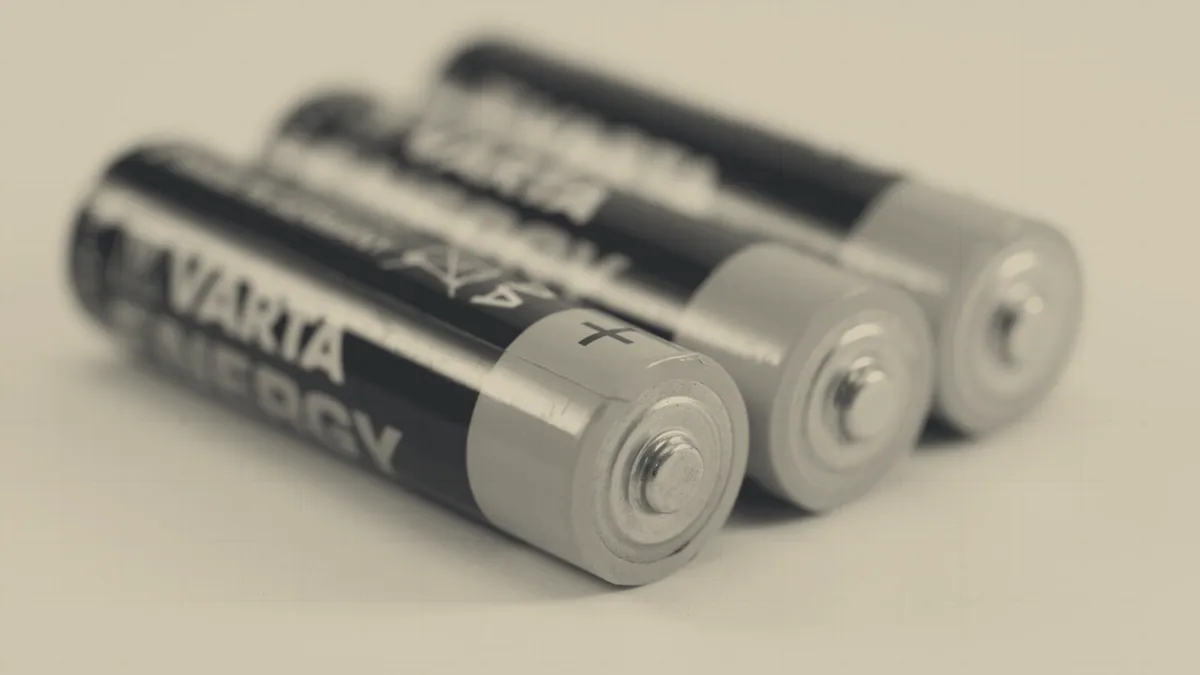
The pack sets three things at once: how long the aircraft stays up, how much current the motors can draw when you ask for a fast climb, and how much the machine costs to keep running. A frame lasts years and a set of propellers costs a few pounds. The packs are bought again and again, they are the first part of a drone to wear out, and they are the only part that can start a fire on a kitchen table.
What the writing on the pack means
The writing on the pack is four figures and a connector, and each one changes something the pilot notices. A common label reads 3S 2200mAh 25C, followed by the plug type moulded into the lead. Read it left to right: cells in series, capacity, discharge rate, connector.
| Marking | What it states | What it changes |
|---|---|---|
| 3S, 4S, 6S | Cells wired in series, 3.7V nominal each | Voltage, and so thrust. A 4S pushes harder than a 3S of the same capacity |
| 2P, 3P | Cells wired in parallel | Capacity only. Voltage stays where the series count put it |
| 2200mAh | Capacity, in milliamp hours, which is 2.2 amp hours | Endurance and weight together |
| 25C | Continuous discharge rate, as a multiple of capacity | Current available without the voltage collapsing. 2.2Ah at 25C is 55A |
| The plug | The main power connector | Nothing electrical, but it has to match the aircraft and the charger lead |
| The balance lead | A small plug with one wire per cell plus a common | It lets a charger see each cell instead of the pack as a lump |
Two of those are routinely misread. Capacity is a quantity, not a rating of power: a 5000mAh pack does not fly harder than a 2200mAh one, it flies longer and weighs more. The C figure is printed largest on cheap packs and is the one most often optimistic, because nothing on the outside of a pouch proves it. A C rating far above what the aircraft draws is not worth paying for; one below it is a pack that sags, gets hot and ages fast.
The word lithium on a label is not a specification. Lithium polymer and lithium ion are both lithium chemistries and both charge to about 4.2 volts a cell. The difference is construction: the pouch gives up very high current for its weight and pays in service life, while the cylindrical cell holds more energy for its weight and dislikes a hard burst. Racing machines and small quadcopters run LiPo almost without exception.
Why a bigger pack does not simply buy more minutes
A bigger pack buys minutes only until its own mass eats them. Doubling capacity roughly doubles the stored energy, but it also adds weight the motors hold up for the whole flight, so the curve flattens and then turns down. Every airframe has a capacity at which the pack is carrying itself, and past that point a heavier battery is a shorter flight. Flight time explains where that point sits on the classes of machine this site covers.
Weight has a second consequence here, because the registration and flying requirements published by the Civil Aviation Authority turn on a 250 gram threshold measured ready to fly, battery included. A machine that sits just under 250g with its standard pack can cross the line with a larger one. Those requirements change, and the Civil Aviation Authority is where they are checked.
What a charger for these packs actually does
A charger for a lithium polymer pack does two jobs, and only one of them is putting energy in. It drives current into the pack until each cell reaches its full voltage, then holds that voltage while the current tapers away, which is why the last portion of a charge takes far longer than the first. The second job is balancing: reading every cell through the balance lead and bleeding down the ones running ahead, so the pack finishes level rather than with one cell full and another short. Cells drift apart with use, and a pack allowed to drift will over-discharge one cell in flight.
The standard charge rate is 1C, a current in amps equal to the capacity in amp hours: 2.2 amps for a 2200mAh pack, about an hour plus the taper. Faster charging costs cycles. Charging covers the settings, the leads and the reasons a pack refuses to take a charge.
Charging a pack without the proper charger
There is no safe improvisation here, and this is the one question on this page with a flat answer. A bare lithium polymer pack has no protection circuit of its own, so the thing controlling the charge is the charger. A bench power supply, a phone charger, a bare charging module meant for a single cell, or another pack, all of them can push a cell past its top voltage, and a cell taken past its top voltage does not fail politely. A small balance charger sits in the under fifty pounds band; the cost of not having one is the airframe.
Caution
Never charge a lithium polymer pack from anything that cannot see the individual cells and cannot stop. Do not charge a pack still hot from a flight, and do not charge one that is cold to the touch until it has come back to room temperature. Charge on a hard surface, with nothing flammable within reach, and stay in the room.
Ready to fly camera drones are the exception that proves the rule. Their packs are sealed units with the charging electronics inside, and they charge from the maker's own hub or lead. The pack is still lithium polymer and everything here still applies, but the balancing happens where you cannot see it.
Where the pack lives between flights
Between flights a pack does not live fully charged. A cell held at its top voltage ages measurably faster than one held part charged, and over a season that is the difference between a pack that still flies and a pack that puffs. Chargers therefore have a storage mode that takes each cell to roughly 3.8 volts, a little over half capacity. A pack that will not fly within the next day or two goes to storage charge; one coming out tomorrow morning can stay full overnight.
The rest is short: keep packs cool and dry, keep them away from anything that will burn, keep connectors from touching each other in a bag, and look properly at any pack that has been dropped. Safety and storage sets out the bag, the box, the cold, and what to do with a pack that has failed.
How a pack ages, and when to stop flying it
A pack ages in two ways at once, and both are measurable from the cockpit. Capacity falls, so the same flight lands with less in reserve. Internal resistance rises, so the voltage sags harder under throttle and the pack comes back warmer than it used to. Owners usually notice the second first, because the aircraft feels soft in a climb before the timer changes much.
Five signs mean a pack is finished, and four of them are visible without instruments.
- Swelling, however slight. A pouch that no longer sits flat is producing gas inside, and that is not reversible.
- A dent, a scuff through the foil, or any puncture. The foil is all that separates the layers inside.
- A cell reading noticeably lower than its neighbours after a rest, or one the charger keeps having to balance.
- Heat after a gentle flight, or heat during a normal charge.
- A flight time well below what the pack used to give on the same aircraft in the same conditions.
Caution
A swollen or damaged pack is not flown, not charged and not stored with the others. Put it somewhere it cannot set anything alight, such as a metal tin or an unglazed pot outdoors, and take it to a battery collection point. Lithium packs do not go in household waste, and a damaged one should be declared when it is handed over.
Retiring packs on time is the cheapest maintenance on a drone. Three packs bought together and flown in rotation reach the end of their working life at roughly the same moment, so the running cost arrives in a lump rather than a drip, and it is worth planning for in the two hundred to five hundred pound band of aircraft.
Where to start
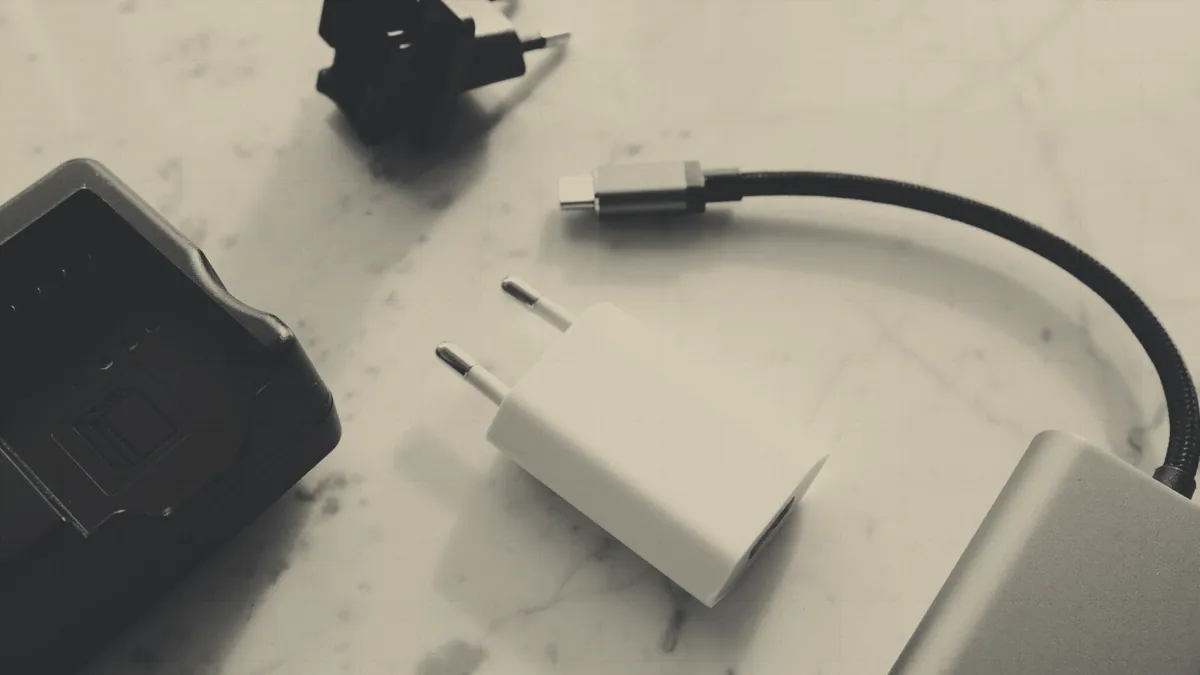 1. LIPO BATTERY CHARGERChargingA drone's LiPo battery is charged with a balance charger, a device that fills the lithium polymer pack cell by cell rather than as a single block.
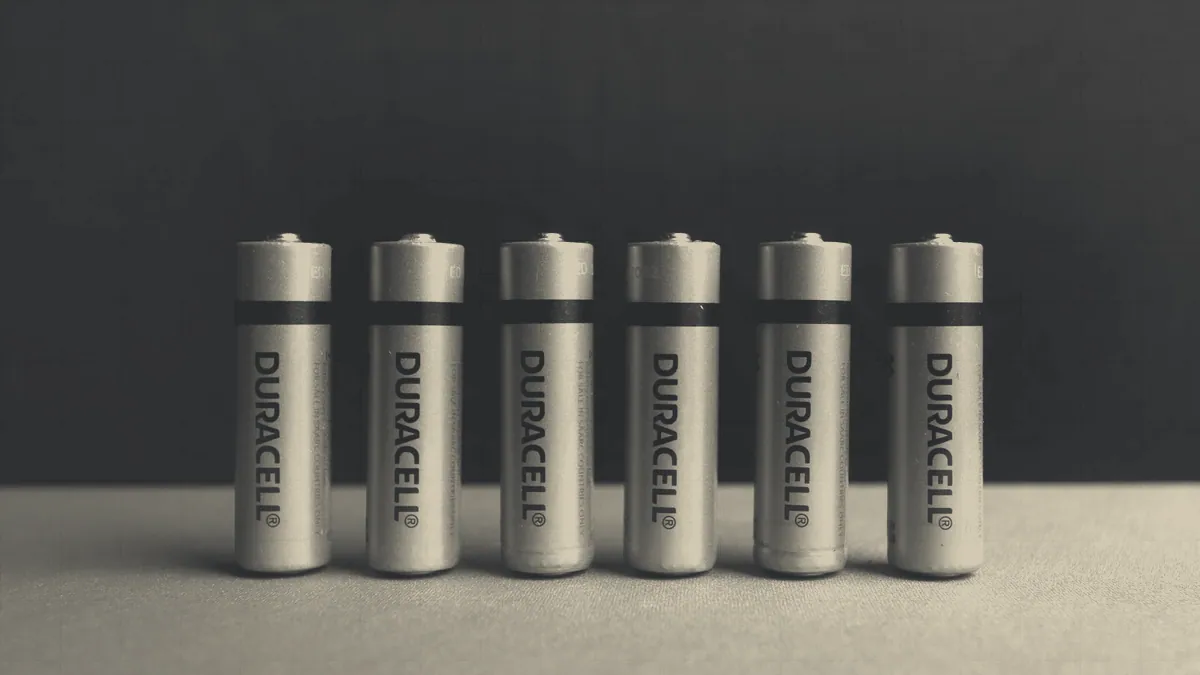 2. LITHIUM VS LIPO BATTERYLiPo against lithium ionLithium polymer and lithium ion are both lithium rechargeable chemistries.
 3. LIPO BATTERY BAGSafety and storageA drone battery is charged and stored inside a LiPo bag, a fire resistant pouch usually lined with woven glass fibre.