Drone kits
A drone kit is a boxed set of the parts needed to build a flying aircraft yourself: a frame, four motors, four electronic speed controllers or a combined board, a flight controller, propellers and the fasteners to hold them together. It is not a finished drone in a flat box. Most kits leave out the three things that cost the most and matter the most, which are the battery, the radio link and, on a first person view build, the goggles. Building one is the normal route into racing and a poor route into photography, and knowing which of those you want settles the question before any parts are bought.
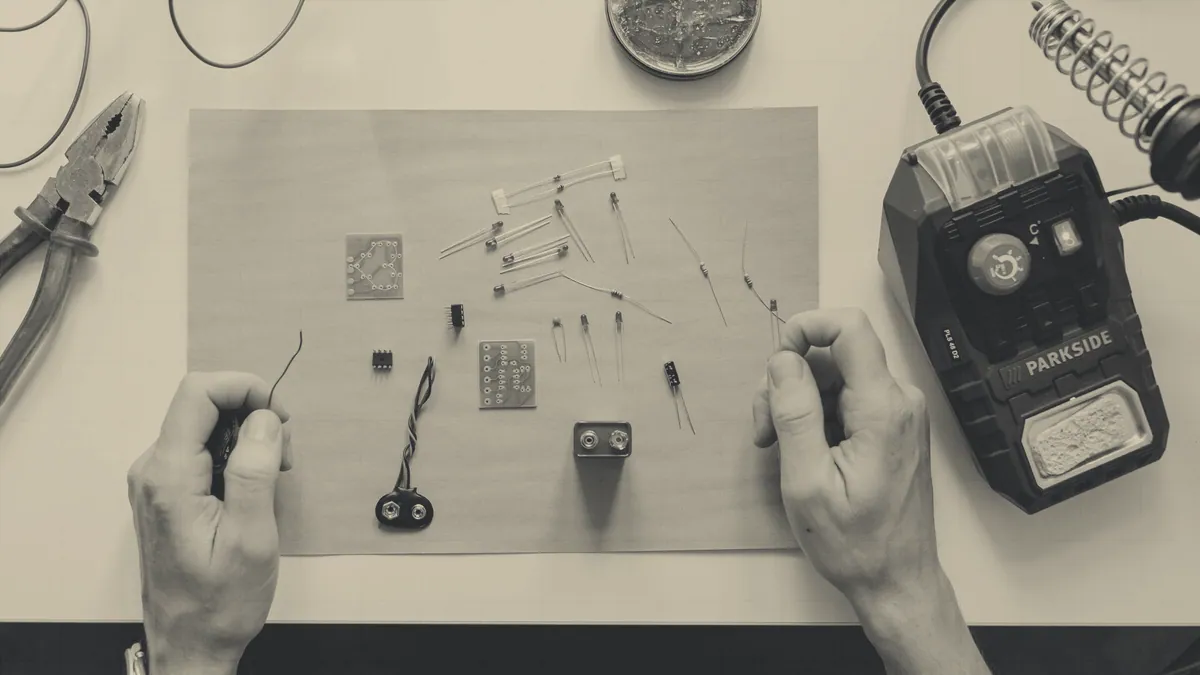
What is in the box, and what is not
What is in the box varies by kit far more than the word suggests, and the gap between two kits at similar prices is usually the gap in what they omit. Three levels are sold, and the abbreviations on the listing tell you which one you are looking at.
| Kind of kit | What it includes | What you still have to buy |
|---|---|---|
| Parts kit | Frame, motors, speed controllers, flight controller, propellers, hardware | Battery, charger, receiver, transmitter, and on an FPV build the camera, video transmitter and goggles |
| Bind and fly | A built and tested aircraft with a receiver, ready to bind to a handset | Battery, charger, transmitter, goggles |
| Ready to fly | Everything in one box, aircraft and handset together | Usually nothing beyond spare propellers and spare packs |
The distinction matters because a parts kit advertised at an attractive figure is commonly half of the real cost. The battery and charger, the transmitter, and the goggles on an FPV build are each substantial purchases in their own right, and the last two are separate radios, the control link on the 2.4 GHz band and the video link on 5.8 GHz. Both outlast several aircraft, which is the one consolation.
The tools and the skills a build actually needs
To build a drone from a kit you need four things beyond the parts, and only one of them is a tool most households already own. A temperature controlled soldering iron is the first, because motor wires, the power lead and the video transmitter are all soldered joints and a cheap iron makes cold joints that fail in the air. A hex driver set in the small metric sizes is the second. A smoke stopper or a current limited first power up is the third, and it is the part beginners skip. A computer running the configuration software for the flight controller is the fourth, since a modern build is set up in software and not with switches.
The skills are learnable in an evening and are genuinely required. Soldering to a board without lifting a pad, setting motor direction so the aircraft does not flip on take off, and reading a wiring diagram are the three that decide whether the first power up is uneventful.
Caution
A short circuit on a lithium polymer pack is the most dangerous thing that happens on a workshop bench. A pack will deliver enough current through a reversed connection to melt wire and start a fire in seconds. Check polarity twice before the first power up, power a new build through a current limiting device rather than straight off a pack, and never leave a charging pack unattended or store one at full charge.
Racing and FPV kits, where building is the norm
Racing and FPV kits are where building is the standard route rather than the enthusiast's detour, and there are three reasons for it. A racing quadcopter is crashed regularly, so it has to be repairable by its owner, which means its owner has to have built it. Its components are chosen against each other, so a builder tunes power, weight and durability to the flying they actually do. And the parts are individually cheap enough that a crash is a replacement arm rather than a write off.
A typical racing build is a 5 inch class quadcopter, meaning propellers 5 inches across on a carbon frame of about 220 mm across the motor to motor diagonal, with the camera feeding a video transmitter and the pilot flying through goggles. Smaller 3 inch builds on a 150 mm frame, and 2 inch builds below those, exist for tighter spaces and are quieter and safer indoors. FPV and racing drones covers the class itself, what the goggles do, and why flying by camera is a different skill from flying by eye. The build is a means to that, not a hobby of its own, although plenty of people end up preferring the bench to the field.
Fixed wing and plane kits
Fixed wing kits are the other half of the building tradition and they are older than multirotors by decades. A plane kit arrives as a moulded foam or balsa airframe with a motor, a speed controller and servos, and the builder adds the receiver, the pack and the flying surfaces' setup. The appeal is endurance: a wing produces lift from forward speed, so it stays airborne far longer per pack than any multirotor and covers real distance while doing it.
The disadvantage is where a fixed wing model is honestly the wrong answer. It cannot hover, so it is useless for the photography most buyers want. It needs open ground to launch into and open ground to land on, which rules out most gardens and many parks. And it is less forgiving of a bad first flight, because a multirotor that gets into trouble can be told to stop and a plane cannot.
Should a beginner start with a kit?
No, unless the flying you want is racing. A beginner whose goal is photographs should buy a finished aircraft, because a first build combined with a first flight means two unfamiliar failures happening at once and no way to tell which caused the crash. What a drone actually is sets out the classes, and the sub 250 gram folding camera class is a far better first purchase for that reader than any kit.
A beginner whose goal is racing should start with a cheap ready to fly machine and a simulator, fly both until crashes stop being surprising, and then build. The kit will be a better aircraft at that point because they will know what they want from it. Camera drones is the honest recommendation for the first group, and it makes no apology for being the boring answer. Line of Sight covers both routes, the classes on each of them, and the requirements that attach to the finished aircraft either way.