Care and cleaning
Cleaning a drone requires no special drone cleaner: the whole job is done with a soft brush, a can of dry compressed air, a microfibre cloth and a little isopropyl alcohol, and it takes about ten minutes. There is no fluid sold for this that does anything the alcohol does not do better, and several of the sprays marketed for electronics are worse than nothing on an aircraft with a coated lens and an exposed motor bearing. What decides how long a drone lasts is not what you clean it with, it is whether you clean it at all, and whether you do it on the day rather than the following weekend.
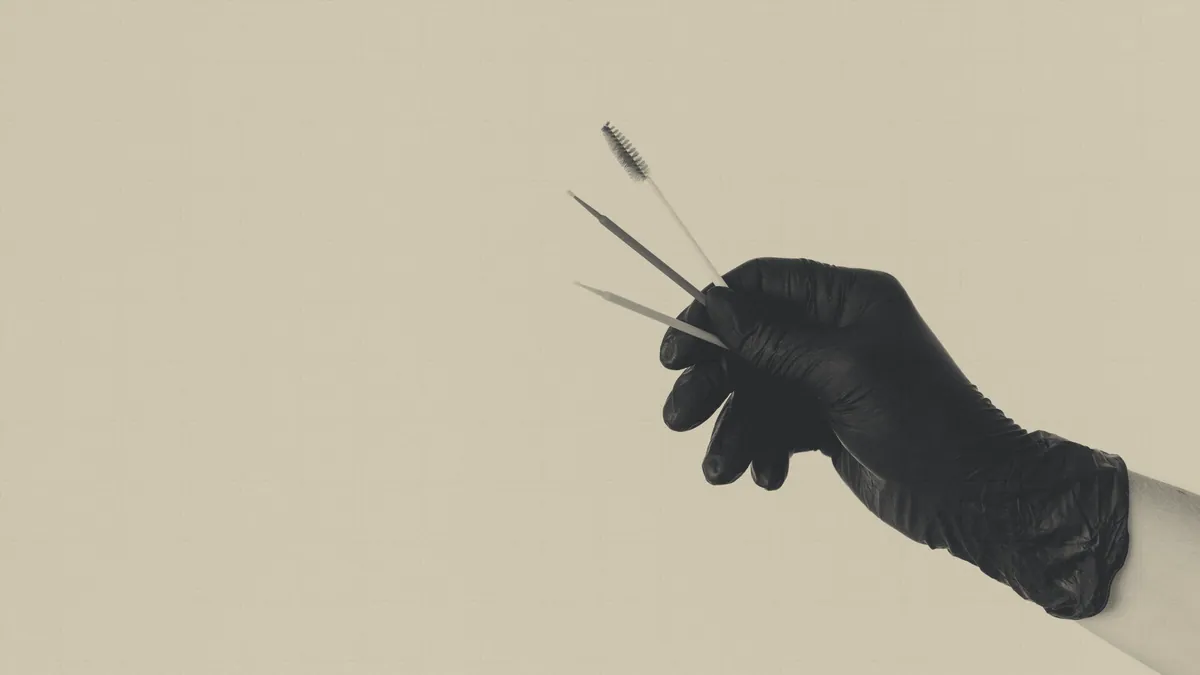
The ten minutes after a flight
The ten minutes after a flight are worth more than any other maintenance you will do, because that is when the dust is loose, the damage is fresh in your memory and the aircraft is still in your hands. Work through the same six steps every time and they become automatic.
- Disconnect the battery before touching anything else on the aircraft.
- Blow the loose grit off the motors, the arm joints and the vents with dry air.
- Brush the remaining dust out of the motor bells and the air intakes with a soft brush.
- Wipe the shell and the arms with a barely damp microfibre cloth, then dry them.
- Clean the camera lens last, with a dry lens cloth and no fluid at all.
- Inspect each propeller against the light for nicks and hairline cracks before it goes in the bag.
The inspection at the end is the part people drop and the part that matters. A drone that comes home dirty and goes in a case dirty starts the next flight with the same grit sitting against the same bearings, and the parts of a drone that suffer are exactly the ones that are expensive to replace.
What to clean a drone with, and what never to use
Use four things and nothing else: a can of dry compressed air held upright, a soft brush of the kind sold for camera bodies, a microfibre cloth, and isopropyl alcohol on a cotton bud for anything greasy. Isopropyl evaporates completely and leaves no residue, which is why it is the right solvent near electronics and the wrong one to use in quantity near a printed lens coating.
Four things do real damage and are all in common use. Water under a tap floods the shell and reaches the mainboard. Household detergent leaves a film that attracts more dust than it removed. Any oil or lubricant on a motor bearing holds grit against the very surface you were trying to clear. A compressed air can held on its side or shaken sprays liquid propellant, which is cold enough to crack a lens and wet enough to reach the board.
Sand, salt and dust: the three that shorten a drone's life
Sand, salt and fine dust do more cumulative damage to a hobby drone than crashes do, and they get in during take off and landing rather than in flight. The propellers are pulling air downwards at full power within half a metre of the ground, so whatever is loose on that ground goes up into the motors, the vents and the gimbal.
Sand is abrasive and goes straight into the motor bearings, where it grinds. Salt is worse and is not a beach problem alone: salt fog travels well inland on the wind, and a machine flown at the coast is carrying salt on every surface within minutes. Salt is hygroscopic, so it keeps drawing moisture out of the air onto the board long after the aircraft is dry, and salt corrosion continues in the case for weeks. Fine dust from a dry field is the least dramatic and the most persistent, because it packs into every gap and works its way inwards each time the aircraft is handled.
Landing pads are the direct answer to all three, and a pad costs less than a set of propellers. After coastal flying, wipe every surface with a barely damp cloth and then a dry one on the same day, since a fresh water rinse is not an option on a machine that is not sealed.
Cleaning the motors and the gimbal
Motors are cleaned dry, from the outside inwards, and never soaked. Blow the grit out of the gap between the spinning bell and the stationary stator, brush what remains away with the soft brush, and use isopropyl on a cotton bud only on the exposed shaft. Turn each motor slowly by hand afterwards: a bearing that has kept its grit will feel rough or notchy rather than smooth, and Motors and speed controllers explains what happens next if that is ignored.
The gimbal on a camera drone is cleaned with the least contact of anything on the aircraft. Blow dust off with the air can from a distance, wipe the arms with a dry cloth, and touch nothing that moves. Never hold a gimbal still while cleaning it and never move it by hand against its motors. Fit the transport clamp before the aircraft goes in the bag, every time, because the gimbal is the assembly a hobby flyer cannot repair at home.
Are drone motors waterproof?
No. Brushless motors on hobby drones are open by design: the gap between the bell and the stator is there to let air through and cool the windings, and it lets water through just as freely. A motor that has been rained on will usually run again once dry, because the windings are varnished, but the bearings hold the water and start to rust, and that is the failure that arrives a month later as a rough corner and a hot motor.
Nor is the rest of the aircraft waterproof. A small number of purpose built machines carry a genuine ingress rating, the 2 digit IP figure whose first digit covers solids and whose second covers water, and no ordinary camera drone or racing quadcopter does. Land before rain rather than in it, and if the aircraft does get wet, remove the battery immediately, leave the machine to dry for at least a day somewhere warm and moving with air, and do not power it up to test it. Powering a wet board is what turns a drying job into a repair.
Storing and carrying a drone between flights
Store the aircraft dry, store the batteries separately, and store both somewhere cool. Lithium polymer packs are not stored full and not stored empty: the correct state for a pack that will sit for more than a few days is a partial storage charge, about 3.8 volts a cell rather than the 4.2 volts a cell of a full one, which on a 3S pack is 11.4 volts against 12.6. Most modern chargers have a storage setting that reaches it, and many drone batteries come down to it on their own if left. A pack stored fully charged for months loses capacity permanently and is far more likely to swell.
Caution
Never store or charge lithium polymer packs on a soft surface, in a hot car or next to anything that burns. Retire any pack that has puffed, been punctured or been through a hard crash: it can ignite hours after the flight, and it must go to a battery recycling point rather than into household waste.
For carrying, a hard case that holds the aircraft, the propellers and the controller in their own recesses is the right answer for anything that travels in a car boot. Fit the gimbal clamp, take the propellers off if the case does not support them, and put a small sachet of desiccant in the lid if you fly near the coast. Lithium batteries travel in the cabin rather than in hold luggage on commercial flights, with the terminals covered, and the exact conditions are set by the airline and the aviation authorities rather than by the drone manufacturer, so check them before the day. FPV goggles have their own foam face gasket that collects dust and should travel in their own pouch rather than loose against the airframe. Line of Sight covers the rest of the subject, from choosing the machine to the requirements that apply once it is in the air.