Radio controlled aircraft
An RC plane is a model aeroplane flown from the ground by radio, with a fixed wing that holds it up and a motor or an engine whose only job is to push it forward. That division of labour is the whole difference between this class and a drone: the wing makes lift out of air moving across it, so the power system is not carrying the aircraft, only overcoming drag, and the model keeps flying for a while when the power is cut. Radio controlled aeroplanes are the oldest part of the hobby and still the largest part of it, and most of what a drone buyer meets for the first time was settled here, including the two stick transmitter, the club field and the walk out to the wreckage.
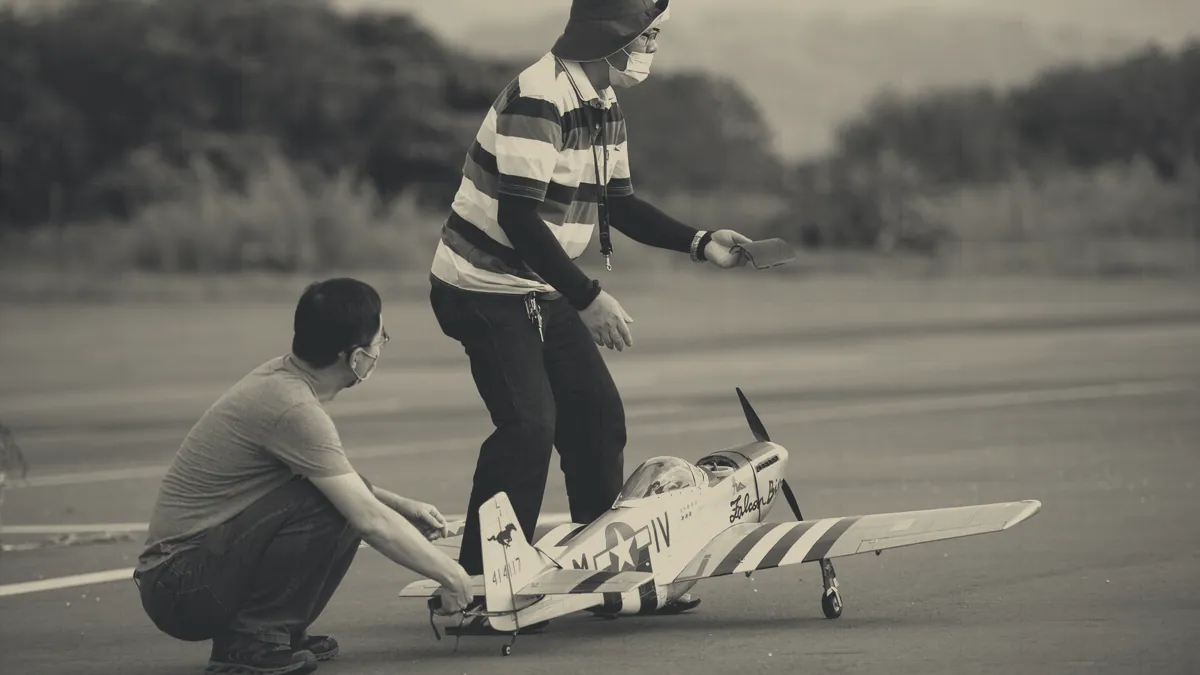
Everything else in the hobby is a variation on how the lift is made. A wing makes it by moving forward; a rotor makes it by spinning, which works standing still and costs far more energy.
Why a wing goes further on the same battery
A wing goes further on the same battery because it turns forward speed into lift, and forward speed is cheap. A multirotor holds itself up by throwing air downwards without pause, and the instant the motors stop it falls. A model aeroplane at cruising speed uses its motor against drag alone, which is a fraction of its weight, so a pack that gives a small camera drone a short flight will keep a comparable model aeroplane up for appreciably longer.
The gap widens the moment the motor is switched off. A glider, or a powered model with the throttle closed, comes down along a shallow path and can be flown for as long as the air it is in is rising. Pilots work thermal lift, the column of warm air that rises off a ploughed field on a still afternoon, and a light model circling in a good thermal climbs on no electricity at all. Nothing with rotors does this, which is why drones have never touched the soaring side of the hobby.
The wing charges for this. A model aeroplane cannot hover over a subject, cannot be flown in a garden, needs open ground to take off from and more of it to land on, and cannot be paused while the pilot works out what to do next. A drone will sit still in the air and wait, which is why the camera went to the rotor and not to the wing.
The four kinds of radio controlled aircraft
Radio controlled aircraft divide into four classes, and the division is made by the mechanism that produces lift rather than by what the machine looks like.
| Class | How it makes lift | What it does best | What it will not do |
|---|---|---|---|
| Model aeroplane | Fixed wing moving forward | Distance, endurance, soaring, low cost per flight | Hover, or fly in a small space |
| Helicopter | One large rotor with blade pitch varied by a swashplate | Hovering, inverted and three dimensional aerobatics | Forgive a mistake, or be learned quickly |
| Multirotor | Four or more fixed pitch rotors trimmed by a flight controller | Steady hovering, camera work, an easy first flight | Glide, or stay up long on a small pack |
| Drive and fly hybrid | Rotors for the air, wheels for the ground | Moving between two elements in one run | Do either job as well as a machine built for it |
RC helicopters are the specialist end of the hobby. A single large rotor with variable blade pitch will hover, fly upside down and stop dead in the air, and it demands a standard of stick work a beginner does not have. Nobody who wants a picture buys one.
Quadcopters are the four rotor multirotors most people now simply call drones, and the machine is only steady because a flight controller adjusts the four motors many times a second. That controller turned the class into a consumer product: it takes the difficulty of hovering away from the pilot and hides it in software. The naming muddle that follows is worth untangling on its own, and so is the wider question of what a drone actually is.
Drive and fly hybrids are the smallest of the four classes by a long way. A machine with both wheels and rotors carries two drivetrains, and every gram of the driving half is dead weight in the air. The class has never grown large, for reasons that are mechanical rather than commercial.
Learning on the sticks, and what it costs
Learning on the sticks means learning three things at once: that the controls reverse when the aircraft is coming towards you, that it is always moving whether or not you have decided what to do, and that throttle and elevator share the work of speed and height in a way most people guess wrongly. A drone hides all three behind its flight controller. A model aeroplane hides none of them, which is why it teaches faster and breaks more often.
Two stick transmitters are the standard control in every class here, and a decent one outlives several airframes. The cheapest ready to fly models arrive with a simple transmitter bound to that model alone; a computer transmitter, which stores separate settings for each aircraft, is the piece of equipment most flyers say they should have bought first.
The entry cost splits into the parts people expect and the parts they forget:
- Buy the airframe, either as a foam model that arrives assembled or as a kit of parts to build.
- Buy the transmitter and receiver, unless the model came as a complete package with both.
- Buy at least three flight packs, since one battery gives a short flight and a long drive home.
- Buy a charger with a balance lead, and watch every pack while it charges.
- Budget for club membership, since most usable flying sites in the United Kingdom are club sites.
- Budget for repairs, since the first season of a first model aeroplane is a season of repairs.
In bands, a small foam trainer supplied complete sits under one hundred pounds, a good computer transmitter in the one hundred to three hundred pound band, and a kit built model with separately chosen electronics in the two hundred to five hundred pound band before it has flown. Nothing is sold here.
Caution
Lithium polymer flight packs are the one component here that can start a fire. A pack that has been crashed, punctured, swollen or run flat can ignite hours later. Charge on a hard surface away from anything that burns, charge through the balance lead, and retire a pack that has changed shape.
Where a drone wins and where an RC plane wins
A drone and an RC plane answer two different questions. A camera drone wins whenever the point of the flight is the picture: it takes off vertically from a footpath, climbs to a chosen height, holds position in wind, points a stabilised camera at a fixed subject and returns to the spot it left. A model aeroplane does none of that well, and a camera bolted to one produces a moving shot of something the pilot could not stop to look at.
The model aeroplane wins whenever the point of the flight is the flying. It covers ground, stays up longer on the same energy, is repaired with glue and tape at the field, costs less per flight, and teaches a skill that transfers, whereas a stabilised drone flies itself and teaches the pilot comparatively little. A crashed foam trainer is usually flying again the same afternoon; a crashed camera drone is a warranty conversation. What a drone actually is matters at this point, because in ordinary use the word has widened to cover the model aeroplane as well.
What the law treats a model aeroplane as
The law treats a model aeroplane as an unmanned aircraft, exactly as it treats a multirotor drone. The requirements published by the Civil Aviation Authority are written around weight, cameras and distance from people, not around the shape of the airframe, so a reader who assumes the rules apply to drones and not to model aircraft has it backwards.
Two figures do most of the work in that scheme. The 250 gram mark is the boundary deciding which set of requirements a small aircraft falls under, and the 400 foot ceiling is the height limit above the surface. Both carry conditions this page does not reproduce, and both sit alongside registration and competency requirements set by weight and by what the aircraft carries.
These requirements change, and they have changed more than once since small drones became common. The Civil Aviation Authority publishes them, and anybody flying a model aeroplane or a drone in the United Kingdom should check the current position there rather than rely on any description written at one moment in time, including this one.
Where to start
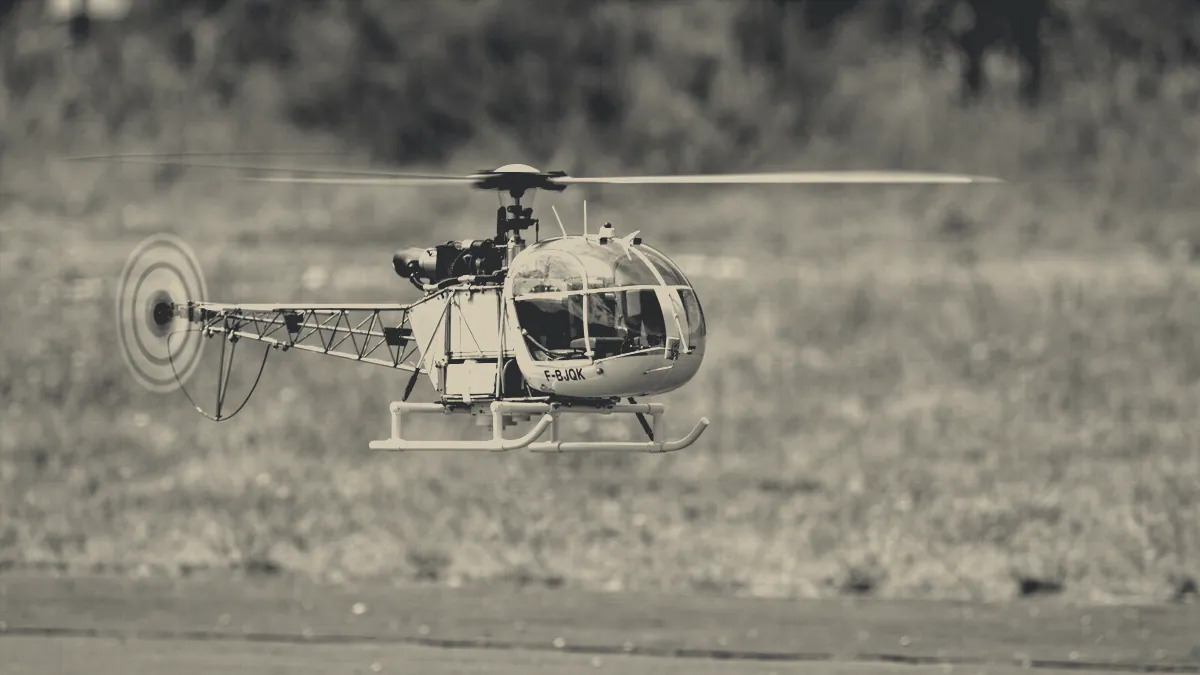 1. RC HELICOPTERRC helicoptersAn RC helicopter is a radio controlled model that gets all of its lift from one powered main rotor.
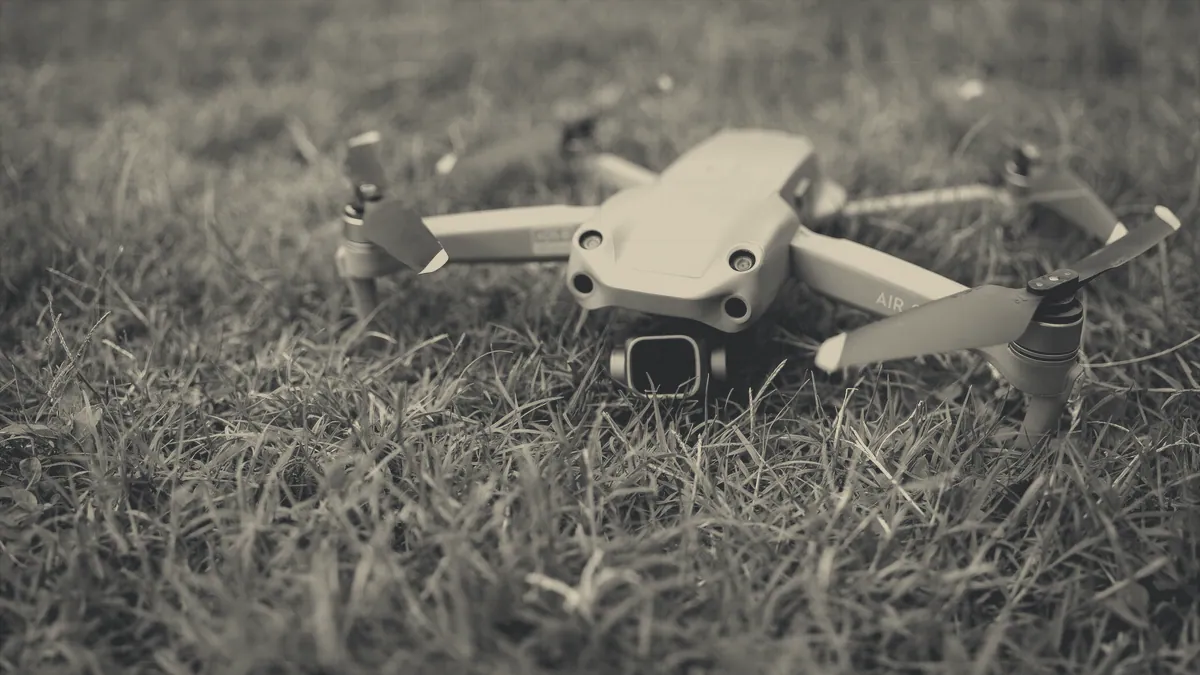 2. QUADCOPTERQuadcoptersA quadcopter is a rotorcraft lifted by exactly 4 rotors, arranged in 2 diagonally opposite pairs that turn in opposite directions.
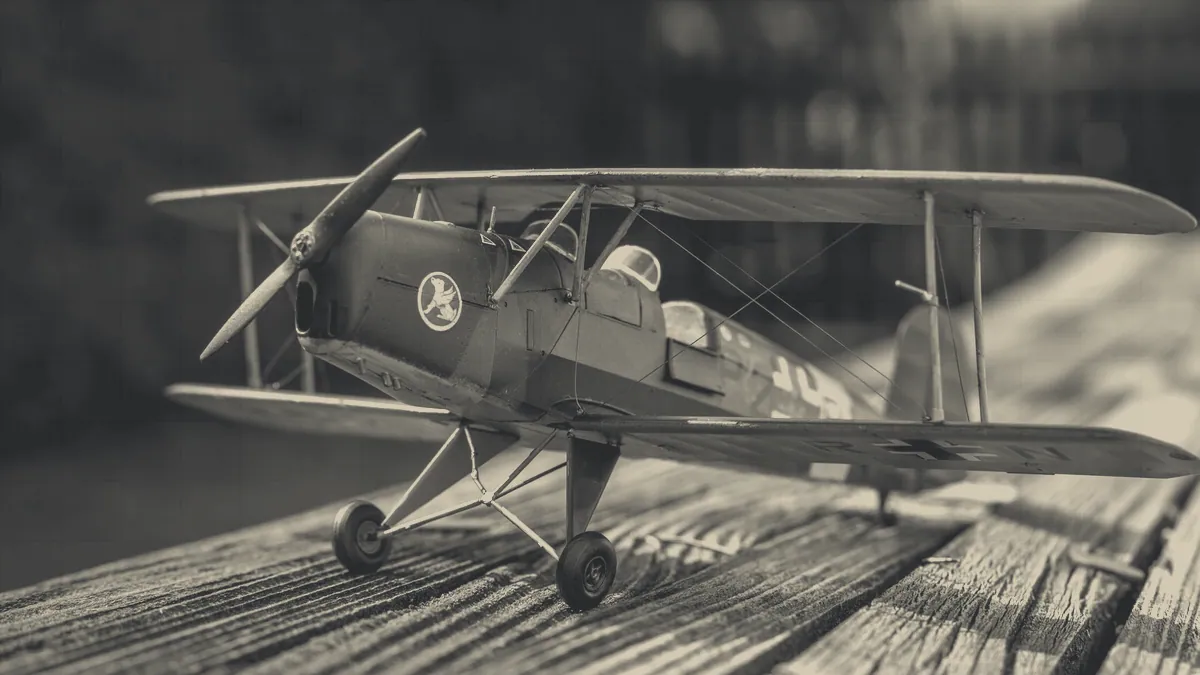 3. RC PLANE KITA first RC planeAn RC plane kit is a boxed model aeroplane supplied as parts rather than as an aircraft: printed sheets of balsa or a set of foam mouldings.
All pages in Radio controlled models
Other sections
Inherited addresses in this section
/product/b-txDrive and fly hybrids