Flight time
The longest flight time available to a hobby buyer sits at the top of the folding camera class, where advertised figures stretch well past half an hour on a single pack and keep climbing with every generation, and the figure you actually get in British conditions is meaningfully shorter than that. Toy machines are advertised at a few minutes. Racing quadcopters flown hard last a few minutes as well, for entirely different reasons. Every one of those numbers is a manufacturer's laboratory figure, and understanding the gap between it and your own stopwatch is more useful than chasing the largest number on a specification sheet.
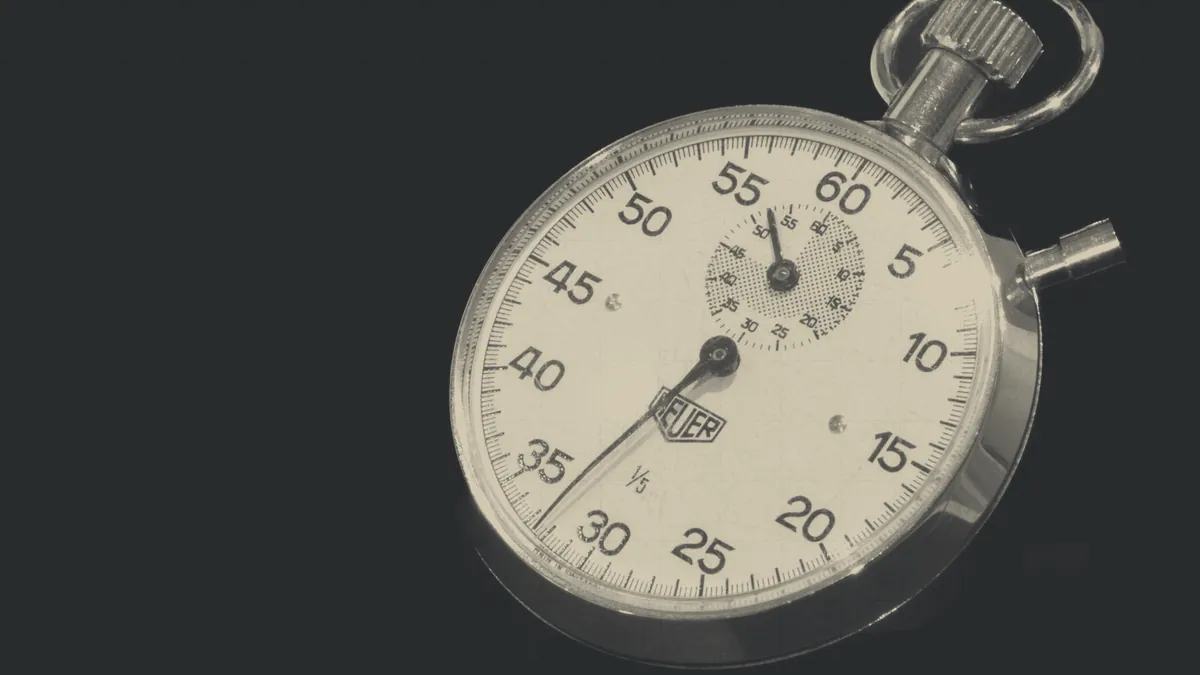
How the advertised figure is produced
The advertised figure is produced in conditions you will never fly in. A flight time quoted on a box is typically measured hovering in still air, indoors or in a windless test, at a steady speed chosen for efficiency, with a new battery at full charge, at a comfortable temperature, and flown until the pack is genuinely empty rather than until the aircraft warns you.
Your flight differs on every one of those. You take off and land, which costs power. You accelerate, stop, reposition and hover, which costs more. You fly in wind, which costs the most. You land on a low battery warning rather than on an empty pack, because landing on an empty pack means arriving rather than landing. The result is that the honest planning figure for most camera aircraft is well under the printed one, and the gap widens as the weather worsens.
The six things that shorten a flight
Six factors shorten a flight, and they are listed here in roughly the order of how much difference each makes to a hobby machine.
- Wind. The largest single factor. A drone holding position in a breeze is flying forwards at the speed of the wind while standing still, and it is drawing current the whole time.
- Cold. Lithium polymer packs deliver less in low temperatures. A pack that gives a full flight in July gives noticeably less on a January morning.
- Weight added. Guards, filters, mounts and larger packs all cost endurance, and a larger pack costs some of what it gives back.
- Flying style. Rapid acceleration and hard stops draw far more current than smooth movement. Hovering is cheaper than manoeuvring.
- Battery age. Packs lose capacity over charge cycles. The loss is gradual and is easy to mistake for a change in conditions.
- Altitude and air density. Thinner air means the propellers work harder for the same lift, which matters in hills rather than at sea level.
Caution
Flying a lithium polymer pack until the aircraft falls out of the sky damages the pack permanently and can leave it unsafe to charge. Land on the low battery warning, every time. A pack that has been run flat, or that has swollen so it no longer sits level in its bay, should be retired rather than charged again.
What each class actually gives you
Flight time varies by class more than it varies within a class, because it is set by the ratio of battery energy to the power the airframe needs to stay up. Battery energy is the cell count, which runs from 1S to 6S in this hobby, multiplied by the capacity in milliamp hours. The comparison below is in relative terms, since a printed figure for a named model would be out of date within months.
| Class | Relative endurance | Why |
|---|---|---|
| Toy and indoor | Shortest of all | Tiny 1S packs and inefficient propellers, with no room for either to improve |
| Racing quadcopters | Very short | Power is the point. The pack is sized for a race, not for an afternoon |
| Sub 250 gram folding models | Moderate | The pack is capped by the class boundary the aircraft is designed to stay under |
| Larger camera aircraft | Longest among multirotors | A bigger pack and efficient propellers, at the cost of weight and bulk |
| Fixed wing models | Longest overall, by a wide margin | A wing produces lift from forward speed, so the motor is not holding the aircraft up |
The fixed wing row is the honest answer to anyone chasing endurance for its own sake. A wing beats a multirotor on time in the air comprehensively, and it loses on everything a camera buyer wants, since it cannot stop, cannot hover over a subject, and needs open ground at both ends of the flight. Camera drones covers what the multirotor gives up that time in exchange for.
Endurance records, and why they are the wrong number
Endurance records for uncrewed aircraft are set by purpose built machines that share nothing with a hobby drone: solar powered wings, hydrogen fuel cells, and airframes designed for one flight. No consumer machine competes, and no record figure is quoted here, because it would not survive the year.
The number that does matter is how many packs you own. A cheap drone with three batteries produces more usable time in the air than a dear one with a single pack, and spare packs are the cheapest endurance anybody can buy. Three packs is the point at which most flyers stop watching the clock, and they are worth budgeting for at the moment of purchase.
Getting more minutes out of what you own
To get more minutes out of an aircraft you already own, change the flying rather than the hardware. Fly on calmer days, and check the forecast for wind speed rather than for rain. Keep packs warm in a pocket before a winter flight, and let them cool before charging afterwards. Fly smoothly, since every hard stop is current spent. Take off into the wind and plan the return leg first, so that the flight home is the easy one rather than the one you make on a warning tone. Replace propellers when they are chipped, because a damaged blade costs efficiency as well as balance.
Drone photography covers the other half of this, which is getting the shot inside the time you have. A planned flight that lands with two minutes to spare and the picture taken is worth more than a longer flight spent deciding what to point the camera at. FPV and racing drones is the one class where none of this applies, because there the pack is deliberately small and the flight is deliberately short. What a drone actually is sets out how the battery sits among the other parts, and why it is the component that decides most of what an aircraft can do.